LM-79 Moving Detector Goniophotometer (Mirror Type C)
LSG-6000

High Precision Rotation Luminaire Goniophotometer
LSG-1890B

High Precision Rotation Luminaire Goniospectroradiometer
LSG-1890BCCD

Goniophotometer for Automotive and Signal Lamps
LSG-1950

Goniophotometer for Traffic Signal Lamps
LSG-1950S

Compact Goniophotometer
LSG-1200A

Near Field Moving Detector Goniophotometer
LSG-1900B


Select an organization
to browse standards
Abstract
Flammability test in textile is a crucial assessment to ensure textile products meet fire safety standards. The LISUN ZY-3 Needle Flame Test provides an effective method for evaluating textile materials’ resistance to ignition by small flames. This article discusses the significance, methodology, and results of using the LISUN ZY-3 Needle Flame Test in textile flammability testing. A comparative table of flammability performance for different textile types is also included to highlight the practical implications of this test.
1. Introduction
Textile materials are widely used in everyday life, including clothing, home furnishings, and industrial applications. Ensuring their fire safety is a critical concern in textile manufacturing. The flammability test in textile helps manufacturers assess the risk of textiles catching fire and contributing to flame spread. One of the most effective and widely used tests for this purpose is the LISUN ZY-3 Needle Flame Test, which simulates the impact of small flames on textiles.
This article provides a detailed overview of the LISUN ZY-3 Needle Flame Test, its working principles, applications, and the importance of flammability testing in textile industries.
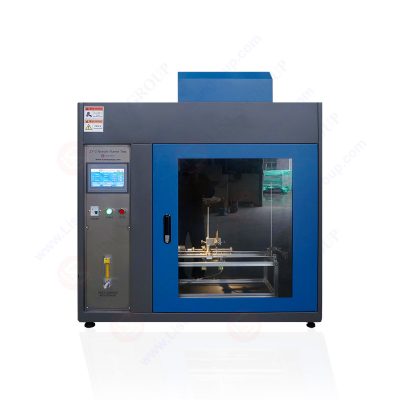
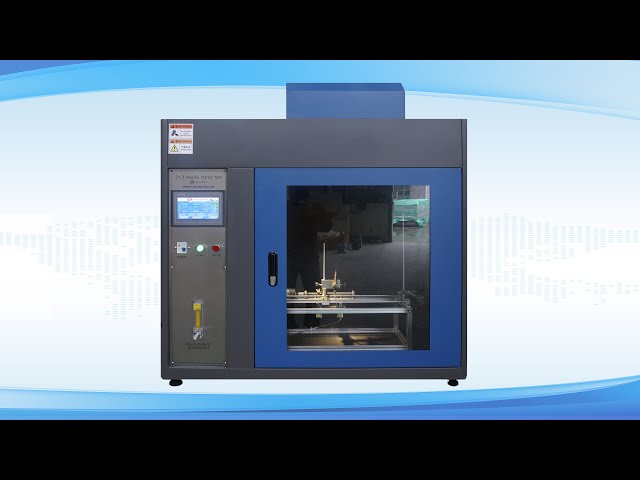
ZY-3 Needle Flame Test
2. Importance of Flammability Test in Textile
Flammability tests in textile materials are essential for:
• Ensuring Consumer Safety: Preventing fire hazards in clothing, upholstery, and curtains.
• Regulatory Compliance: Meeting national and international fire safety standards (ISO 11925-2, UL 94, etc.).
• Product Quality Control: Enhancing the durability and safety of textiles.
• Reducing Fire-Related Risks: Lowering the risk of fire accidents in public and private spaces.
The LISUN ZY-3 Needle Flame Test is an advanced instrument designed to assess the flammability of textiles by exposing them to a controlled flame for a specific duration. It is widely used for safety testing in textiles, electronics, and plastics.
• Compliance with Standards: Conforms to IEC 60695-11-5, ISO 11925-2, and UL 94 standards.
• Adjustable Flame Parameters: Allows precise control over flame height and exposure duration.
• Automatic Ignition System: Ensures consistency and accuracy in testing.
• Real-Time Data Recording: Facilitates detailed analysis of flammability characteristics.
• Safety Mechanisms: Includes automatic shut-off and fire containment features.
For more details, visit the official LISUN product page: LISUN ZY-3 Needle Flame Test.
• Sample Preparation: Textile samples (100mm x 50mm) are conditioned under controlled temperature and humidity.
• Flame Application: A 12mm flame is applied to the textile for a defined period (e.g., 5, 10, or 30 seconds).
• Observation: The burning behavior, flame spread, and afterflame time are recorded.
• Data Analysis: The results are compared with safety thresholds to determine the textile’s flammability rating.
A series of flammability tests in textile were conducted using the LISUN ZY-3 Needle Flame Test on different fabric types. The table below presents the results:
Table 1: Flammability Test Results of Different Textile Materials
| Textile Type | Flame Exposure Time (s) | Afterflame Time (s) | Char Length (mm) | Flammability Rating |
| Cotton Fabric | 10 | 3 | 60 | High Risk |
| Polyester Fabric | 10 | 1 | 30 | Medium Risk |
| Wool Fabric | 10 | 0 | 20 | Low Risk |
| Nylon Fabric | 10 | 2 | 40 | Medium Risk |
| Flame-Retardant Cotton | 10 | 0 | 15 | Very Low Risk |
Cotton Fabric exhibited the highest flammability risk due to its prolonged afterflame time and significant charring.
Polyester and Nylon Fabrics showed moderate risk, with shorter afterflame times and reduced char length.
Wool Fabric demonstrated excellent fire resistance, with no observable afterflame.
Flame-Retardant Cotton performed best, with minimal charring and no afterflame, making it ideal for fire-resistant applications.
5. Conclusion
The flammability test in textile is essential for ensuring fire safety in textile products. The LISUN ZY-3 Needle Flame Test provides a reliable and standardized method for evaluating the fire resistance of textiles. Experimental results confirm that textile composition significantly affects flammability, with flame-retardant fabrics offering superior protection.
Manufacturers should integrate rigorous flammability tests in textile production to enhance product safety and compliance with international fire safety regulations.
For more information, visit the LISUN official product page: LISUN ZY-3 Needle Flame Test.
Tags:ZY-3Your email address will not be published. Required fields are marked *


 English
 中文简体
中文简体 English
 Русский
 Español
 Português
 Türkçe
 العربية
 Deutsch
 Polski
 Italiano
 Français
 한국어
한국어 ไทย
ไทย Tiếng Việt
 日本語
日本語