LM-79 Moving Detector Goniophotometer (Mirror Type C)
LSG-6000

High Precision Rotation Luminaire Goniophotometer
LSG-1890B

High Precision Rotation Luminaire Goniospectroradiometer
LSG-1890BCCD

Goniophotometer for Automotive and Signal Lamps
LSG-1950

Goniophotometer for Traffic Signal Lamps
LSG-1950S

Compact Goniophotometer
LSG-1200A

Near Field Moving Detector Goniophotometer
LSG-1900B


Select an organization
to browse standards
Abstract
Gloss meters are essential instruments for quantifying the glossiness of surfaces across various industries, including automotive, paint, plastic, and ceramics. Single angle technology, particularly at a 60° measurement angle, is widely adopted for its effectiveness in assessing semi-gloss surfaces. This paper provides an in-depth analysis of single angle technology in gloss meters, with a focus on the LISUN AGM-500PRO model. We discuss the principles of gloss measurement, the significance of the 60° angle, and the specific features and applications of the AGM-500PRO.
1. Introduction
Gloss is a critical parameter that defines the visual appearance and quality of a product’s surface. Accurate measurement of gloss is vital for quality control and ensuring product consistency. Gloss meters, devices designed to measure the specular reflection of light from a surface, are commonly used for this purpose. Single angle technology refers to gloss meters that measure gloss at a specific angle, with 60° being the standard for general-purpose applications.
2. Principles of Gloss Measurement
Gloss measurement is based on the amount of light reflected from a surface at a specific angle. The measurement angle is chosen based on the expected gloss level of the surface:
• 20°: Used for high-gloss surfaces.
• 60°: Standard angle for semi-gloss surfaces.
• 85°: Used for low-gloss surfaces.
The 60° angle is particularly significant as it serves as the universal measurement angle for a wide range of applications, providing a balance between sensitivity and applicability.
3. Single Angle Technology
Single angle gloss meters are designed to measure gloss at one fixed angle, such as 60°. This technology simplifies the measurement process and is cost-effective for routine quality control where the gloss level falls within a specific range. The simplicity of single angle technology ensures ease of use and consistent results.
4. Overview of the LISUN AGM-500PRO Gloss Meter
The LISUN AGM-500PRO is a compact and lightweight gloss meter utilizing single angle technology at 60°. Weighing only 80 grams and comparable in size to a name card, it is highly portable and convenient for on-site measurements.
Key Features:
• Automatic Calibration: The device features auto-calibration, eliminating the need for manual calibration and allowing immediate measurement upon powering on.
• Measurement Speed: Capable of completing a single measurement in less than 1 second, enhancing efficiency in quality control processes.
• Battery Life: Supports up to 10,000 continuous measurements after a full recharge, ensuring long-term usability without frequent charging.
• Calibration Base: Equipped with an anti-pollution calibration base, enabling calibration at any time to maintain long-term accuracy.
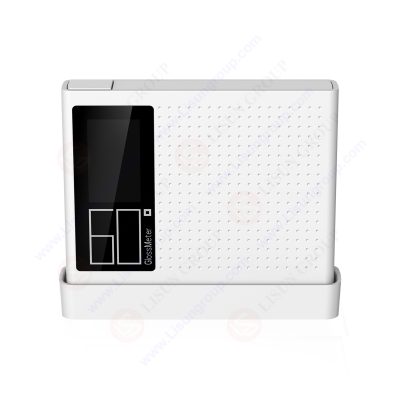
AGM-500PRO_Gloss Meter with Single Angle
Technical Specifications:
| Parameter | Specification |
| Measurement Angle | 60° |
| Measurement Range | 0-1000 Gloss Units (GU) |
| Resolution | 0.1 GU |
| Calibration | Automatic |
| Measurement Time | <1 second |
| Weight | 80 grams |
| Dimensions | Comparable to a name card |
5. Applications of the AGM-500PRO
The AGM-500PRO is suitable for measuring the surface gloss of various materials, including:
• Paints and Coatings: Ensuring uniform gloss levels in automotive and industrial applications.
• Plastics: Assessing the quality and finish of plastic products.
• Metals: Evaluating the surface treatment and finish of metal components.
• Ceramics: Measuring the glossiness of ceramic tiles and sanitary ware.
• Building Materials: Checking the gloss levels of materials like marble and granite.
6. Advantages of Single Angle Technology in Gloss Measurement
• Simplicity: Single angle gloss meters are straightforward to operate, making them ideal for routine quality control tasks.
• Cost-Effectiveness: They are generally more affordable than multi-angle gloss meters, providing a budget-friendly solution without compromising accuracy.
• Consistency: Measuring gloss at a single, standard angle ensures consistent and comparable results across different measurements and surfaces.
7. Conclusion
Single angle technology, exemplified by the 60° measurement angle, plays a crucial role in gloss measurement across various industries. The LISUN AGM-500PRO gloss meter leverages this technology to provide a compact, efficient, and accurate solution for assessing surface gloss. Its features, including automatic calibration, rapid measurement, and portability, make it a valuable tool for quality control applications.
Tags:AGM-500PROYour email address will not be published. Required fields are marked *


 English
 中文简体
中文简体 English
 Русский
 Español
 Português
 Türkçe
 العربية
 Deutsch
 Polski
 Italiano
 Français
 한국어
한국어 ไทย
ไทย Tiếng Việt
 日本語
日本語