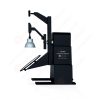
LM-79 Moving Detector Goniophotometer (Mirror Type C)
LSG-6000
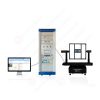
High Precision Rotation Luminaire Goniophotometer
LSG-1890B
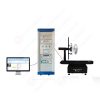
High Precision Rotation Luminaire Goniospectroradiometer
LSG-1890BCCD
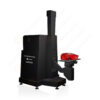
Goniophotometer for Automotive and Signal Lamps
LSG-1950
Goniophotometer for Traffic Signal Lamps
LSG-1950S
Compact Goniophotometer
LSG-1200A
Near Field Moving Detector Goniophotometer
LSG-1900B
 LEDs and Luminaire Test Solutions
 LM-79 and LM-80 Test Solutions
 LED Driver Test Solutions
 Household Appliances Test Solutions
 Mobile and Network Test Solutions
 Automotive Electronics Test Solutions
 Audio-Video and IT Test Solutions
 Cable and Wire Test Solutions
 Plugs and Sockets Test Solutions
 Power Switch Test Solutions
 Transformer Test Solutions
 Electric Toys Test Solutions
 Energy Meter Test Solutions
 Motor-Operated Tool Test Solutions
Select an organization
to browse standards
Abstract
Automotive interior materials are the primary medium for rapid fire spread inside vehicles, and their flame retardant performance directly determines the escape safety of drivers and passengers. The Automotive Interior Materials Burning Tester can simulate open flame scenarios inside vehicles, precisely control three core variables including flame height, burning duration and sample placement angle, and quantitatively measure key indicators such as material burning rate, flame spread length and self-extinguishing performance, as well as secondary ignition risks caused by molten dripping. Taking LISUN ZRS-4H automotive interior combustion test apparatus as the research object, this paper elaborates the equipment structure, testing principle and standardized test procedures. Combined with actual test data, the combustion characteristics of different interior materials are compared, and the application value of the equipment in complete vehicle manufacturing, third-party testing and rail transit fields is analyzed. It provides technical reference for the research and development of flame retardant automotive interior materials and compliance testing.
1 Introduction
With the rapid expansion of the new energy vehicle industry, the consumption of plastic, foam sponge, fabric, leather and other interior materials inside vehicles keeps rising, and the fire risks of interior materials caused by vehicle collisions and battery thermal runaway have attracted widespread attention. China’s mandatory standard GB 8410-2006 clearly stipulates that the burning rate of automotive interior materials shall not exceed 100 mm/min, and all mass-produced automotive interior parts must pass the flammability test before market launch.
Conventional simple combustion devices suffer from unstable flame height, low timing accuracy and interference of ambient air flow on test data, which fail to meet the simultaneous testing requirements of multiple domestic and international standards such as ISO 3795, FMVSS 302 and ASTM D5132. The Automotive Interior Materials Burning Tester (LISUN ZRS-4H) adopts an integrated closed combustion chamber, dual calibrated flame control system and high-precision timing module to automatically complete the whole process of ignition, flame application, timing and combustion judgment. It eliminates environmental interference and realizes standardized flame retardant performance testing for various interior materials, making it the core testing equipment for automotive safety inspection.
2 Equipment Structure and Core Parameters of LISUN ZRS-4H Automotive Interior Materials Burning Tester
2.1 Overall Structural Design
ZRS-4H automotive interior combustion test apparatus, namely the Automotive Interior Materials Burning Tester, is composed of a closed windproof combustion cabinet, 30° adjustable sample fixture, propane premix burner, gas flow calibration system, multi-channel digital timing module, temperature monitoring unit, high-temperature resistant observation window and residue collection tank. The combustion cabinet measures 1000×500×800 mm with built-in heat insulation and windproof layers, and a smoke exhaust interface is reserved on the side to connect pipelines for discharging combustion flue gas. A lockable high-temperature resistant observation window is installed on the front panel to facilitate full observation of flame spread, molten dripping and self-extinguishing processes.
The control panel integrates buttons for startup, gas supply, ignition and timing adjustment. Three independent digital display screens respectively show flame application time, afterflame time and flame temperature in real time. The flame height can be double-calibrated via flowmeter and scale to stabilize at 20±2 mm, and the flame temperature 20 mm above the nozzle can be stably maintained above 820 ℃, fully meeting the thermal intensity requirements of mainstream global automotive interior flammability test standards.
2.2 Core Technical Parameters
Samples are fixed by metal fixtures with a standard test angle of 30°. The unified sample specification is 356±2 mm × 100±2 mm with thickness ≤13 mm, compatible with most interior materials including seat leather, ceiling fabric, door panel plastic and foamed floor mats. Propane gas with purity ≥95% is adopted as fuel, with adjustable flow rate ranging from 0.1 to 1 L/min. The combustion control time is continuously adjustable from 0 to 999.9 s with standard flame application time of 15 s, supporting automatic ignition and automatic flame cutoff. A graduated scale with 1 mm precision is equipped to record flame spread distance, and simultaneously judge whether the absorbent cotton 300 mm below the sample is ignited by molten droplets, so as to fully restore the secondary fire spread risk of materials.
2.3 Applicable Standard System
This Automotive Interior Materials Burning Tester covers mainstream domestic and international flame retardant standards for vehicle interiors: domestic standards GB 8410-2006 and GB/T 27904-2011; international standards FMVSS 302, ISO 3795 and ASTM D5132; rail transit standards BS 6853 and DIN 75200. It can simultaneously meet the testing demands of passenger vehicles, commercial vehicles, high-speed rails and special vehicles, and support testing work of third-party certification laboratories such as CCC, TÜV and SGS.
3 Testing Principle and Standard Test Procedures of Automotive Interior Materials Burning Tester
3.1 Core Testing Principle
The Automotive Interior Materials Burning Tester simulates the ignition scenario of small open flames inside vehicles. The sample is fixed at a 30° inclined angle, and its free end is burned by propane flame with constant height and temperature for 15 s. After removing the fire source, three core indicators are continuously recorded:
• Flame spread length: the total distance the flame extends from the ignition point to the end of the sample;
• Self-extinguishing time: the duration the material continues to burn until completely extinguished after removing the fire source;
• Burning rate: calculated by the formula V=60L/T (L stands for combustion distance in mm, T stands for total combustion time in s), with the unit of mm/min and the national standard limit of 100 mm/min.
Meanwhile, synchronous observation is conducted to check whether molten droplets ignite the absorbent cotton at the bottom. If ignition occurs, the material is directly judged unqualified to evaluate the secondary fire spread risk. The closed windproof structure isolates external air flow to ensure stable flame morphology, and the timing module achieves precision of 0.1 s to eliminate manual timing errors and guarantee repeatability and accuracy of test data.
3.2 Standard Test Operation Procedures
• Sample Preconditioning: Cut standard samples are placed in an environment of 23 ℃±2 ℃ and relative humidity of 45%~55% for 24 h to eliminate the interference of temperature and humidity on combustion performance.
• Equipment Calibration: Connect the propane cylinder, adjust the flowmeter to calibrate the flame height to 20±2 mm, preheat the burner for 1 min and confirm the flame temperature stabilizes above 820 ℃.
• Sample Clamping: Fix the sample on the 30° metal fixture, push it into the combustion cabinet and close the sealing door, then place absorbent cotton in the collection tank 300 mm below the sample.
• Automatic Flame Application Test: Set ignition duration to 15 s and start the equipment for automatic ignition. The flame contacts the free end of the sample and cuts off automatically after 15 s. The equipment synchronously records afterflame time and flame spread distance.
• Data Recording and Judgment: After the flame is completely extinguished, read the combustion distance and total combustion time, calculate the burning rate, record the molten droplet ignition condition, and judge the qualification level against relevant standards.
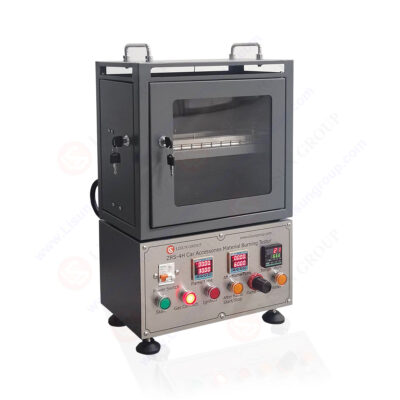
Car Interior Material Burning Tester ZRS-4H
4 Actual Test Data Based on LISUN ZRS-4H Automotive Interior Materials Burning Tester
Four mainstream automotive interior materials are tested in parallel by the Automotive Interior Materials Burning Tester, with 5 samples in each group to take average values. The test environment is 23 ℃ with humidity of 50% and flame application time of 15 s. The test data are shown in Table 1.
Table 1 Combustion Performance Test Results of Different Automotive Interior Materials (ZRS-4H Tester, GB 8410-2006 Standard)
| Sample No. | Type of Interior Material | Average Flame Spread Length (mm) | Average Self-extinguishing Time (s) | Burning Rate (mm/min) | Whether Molten Droplets Ignite Absorbent Cotton | Test Result |
| 1 | Flame-retardant PU seat leather | 42 | 28 | 90 | No | Pass |
| 2 | Ordinary PP door panel plastic | 268 | 162 | 99.3 | Yes | Fail |
| 3 | Flame-retardant polyester ceiling fabric | 36 | 22 | 98.2 | No | Pass |
| 4 | Non-flame-retardant EVA floor mat foam | 356 (burned to the end) | 215 | 99.4 | Yes | Fail |
It can be seen from the test data that flame-retardant modified leather and fabric feature short flame spread distance, fast self-extinguishing speed and no secondary ignition risk, which meet national standard requirements. Unmodified PP plastic and EVA foam have long combustion distances, and their molten droplets are highly likely to ignite absorbent cotton, posing major fire hazards. Vehicle manufacturers can use the Automotive Interior Materials Burning Tester to screen raw materials in batches, optimize flame retardant formulas and reduce internal fire risks from the source.
5 Industrial Application Scenarios of Automotive Interior Materials Burning Tester
5.1 Quality Inspection for Complete Vehicles and Interior Parts Production
Vehicle manufacturers including BYD, Volkswagen and Tesla adopt LISUN ZRS-4H Automotive Interior Materials Burning Tester for incoming sampling inspection of parts, conducting regular flammability tests on seat fabrics, instrument panel skins and air-conditioning plastic air outlets to prevent unqualified interior materials from entering production lines. Interior suppliers utilize this equipment to optimize flame retardant coatings and modified plastic formulas, and adjust the addition ratio of flame retardants for foaming materials to stabilize burning rate indicators of products.
5.2 Third-party Testing and Certification Institutions
Testing laboratories such as SGS, CQC and TÜV apply this equipment to issue compliance test reports, completing domestic CCC and international ECE, EPA vehicle certifications in accordance with GB 8410 and FMVSS 302 standards, so as to provide compliant data support for export of interior products. One single unit supports parallel testing of multiple standards and greatly improves testing efficiency.
5.3 Rail Transit and Special Vehicle Inspection
For interior boards of high-speed trains and subways, as well as interiors of recreational vehicles and new energy special operation vehicles, tests are carried out in accordance with BS 6853 and DIN 75200 standards to evaluate the flame retardant capacity of interiors under battery thermal runaway and closed carriage environments and meet strict fire protection specifications for rail transit.
6 Conclusion
The Automotive Interior Materials Burning Tester (LISUN ZRS-4H) relies on an accurately controllable flame system, closed windproof structure and fully automatic timing acquisition function to stably simulate open flame combustion scenarios of automotive interiors and accurately measure three core flame retardant indicators: burning rate, flame spread length and self-extinguishing performance. It overcomes the shortcomings of traditional testing equipment such as volatile test data, complicated operation and compatibility with only a single standard.
Actual test data verify that the equipment can clearly distinguish combustion differences between flame-retardant modified and ordinary interior materials, and all test results fully comply with domestic and international vehicle safety standards. It is widely applicable to complete vehicle manufacturing, material research and development, third-party testing, rail transit and other fields. Against the trend of safety upgrading for new energy vehicles, the Automotive Interior Materials Burning Tester represented by ZRS-4H will become an indispensable core testing equipment for evaluating flame retardant performance of interior materials, delivering reliable technical support for vehicle fire prevention and protection of drivers’ and passengers’ lives.
Tags:ZRS-4HYour email address will not be published. Required fields are marked *

 English
 中文简体
中文简体 English
 Русский
 Español
 Português
 Türkçe
 العربية
 Deutsch
 Polski
 Italiano
 Français
 한국어
한국어 ไทย
ไทย Tiếng Việt
 日本語
日本語