LM-79 Moving Detector Goniophotometer (Mirror Type C)
LSG-6000
High Precision Rotation Luminaire Goniophotometer
LSG-1890B
High Precision Rotation Luminaire Goniospectroradiometer
LSG-1890BCCD
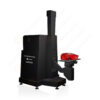
Goniophotometer for Automotive and Signal Lamps
LSG-1950
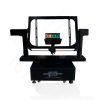
Goniophotometer for Traffic Signal Lamps
LSG-1950S
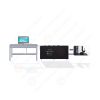
Compact Goniophotometer
LSG-1200A
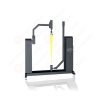
Near Field Moving Detector Goniophotometer
LSG-1900B
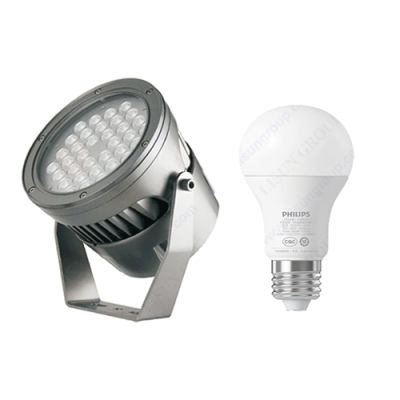 LEDs and Luminaire Test Solutions
 LM-79 and LM-80 Test Solutions
 LED Driver Test Solutions
 Household Appliances Test Solutions
 Mobile and Network Test Solutions
 Automotive Electronics Test Solutions
 Audio-Video and IT Test Solutions
 Cable and Wire Test Solutions
 Plugs and Sockets Test Solutions
 Power Switch Test Solutions
 Transformer Test Solutions
 Electric Toys Test Solutions
 Energy Meter Test Solutions
 Motor-Operated Tool Test Solutions
Select an organization
to browse standards
Abstract
When heating components such as resistors, chips and heating modules inside consumer electronics, household appliances and automotive electronics are overloaded, high-temperature heat sources of 500~960°C will be generated. If the flame retardant performance of surrounding plastic shells and insulating parts is insufficient, thermal decomposition and ignition will easily occur after contact with high temperature, leading to electrical fire accidents. National and international standards mandate glow wire flame retardant tests on non-metallic components of electrical products to assess fire risks.
The glow wire tester is special testing equipment for simulating contact between high-temperature heat sources and materials. Among such devices, the LISUN ZRS-3H glow wire tester is designed in strict accordance with the latest versions of GB/T 5169 series and IEC 60695-2 series standards. It can accurately reproduce the standard test temperature of 960°C and the standard contact pressure of 0.95 N, equipped with automatic timing, automatic sample separation and automatic data recording functions to eliminate manual operation errors. It precisely measures four core indicators including material ignition behavior, glow wire ignition temperature (GWIT), glow wire flammability index (GWFI). It is widely used in third-party testing laboratories, household appliance manufacturers and material research institutions for flame retardant performance verification.
1. Introduction
During the operation of consumer electronics, household appliances, automotive electronics and other products, overload faults of resistors, chips and heating assemblies will form high-temperature heat sources ranging from 500°C to 960°C. If the flame retardant performance of adjacent plastic shells and insulating components is inadequate, thermal decomposition and ignition will easily occur upon high-temperature contact, triggering electrical fire accidents. Domestic and international standards impose mandatory glow wire flame retardant tests on non-metallic parts of electrical products to evaluate potential fire hazards.
The glow wire tester is dedicated testing equipment that simulates contact between high-temperature heat sources and materials. The LISUN ZRS-3H glow wire tester complies fully with the latest standards including GB/T 5169.10/11/12/13-2023/2024, IEC 60695-2-10~13:2021 and UL746A. It delivers accurate reproduction of the standard 960°C test temperature and 0.95 N contact pressure, featuring automatic timing, automatic sample retraction and automatic data logging to minimize human-induced test deviations. It enables precise measurement of key metrics such as material ignition characteristics, GWIT and GWFI, supporting three types of tests: finished product flammability test, material GWFI index test and GWIT ignition temperature test, and meeting market access certification requirements such as 3C, UL and CQC.
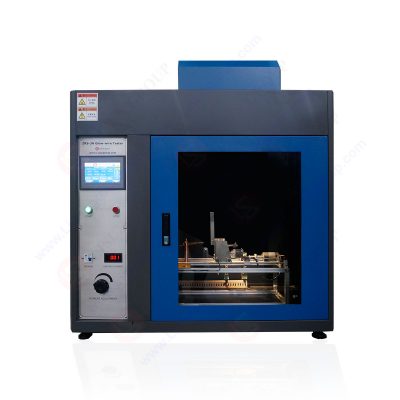
ZRS-3H Glow-wire Test Apparatus
2. Working Principle and Core Technical Parameters of ZRS-3H Glow Wire Tester
2.1 Working Principle
The core heating component of the ZRS-3H glow wire tester is a U-shaped nickel-chromium alloy (80Ni/20Cr) glow wire with a diameter of 4 mm, which generates high temperature via high-current energization. A 1 mm K-type armored thermocouple monitors the tip temperature with a temperature control accuracy of ±3°C. During testing, the equipment presses the glow wire against the sample surface at constant pressure and automatically retracts it after a set duration. The system automatically captures ignition time, flame extinction duration and afterglow time, and simultaneously observes whether dripping substances ignite the underlying cotton pad. It comprehensively evaluates the high-temperature combustion behavior of materials and finally calculates two critical flame retardant indicators: GWIT and GWFI.
2.2 Core Specifications and Applicable Standards
The ZRS-3H glow wire tester features a temperature measurement range from ambient temperature to 1100°C, timing accuracy of 0.1 s, and stable contact pressure of 0.95 N ± 0.1 N. The whole machine adopts high-temperature anti-corrosion steel structure and is equipped with an LCD touch operation interface. It fully complies with domestic GB/T 5169.10/11/12/13-2023/2024, IEC 60695-2-10~13:2021, UL746A and other domestic and international fire protection standards. It can simultaneously complete finished product flammability test, material GWFI index test and GWIT ignition temperature test, satisfying market access certification requirements of 3C, UL, CQC and other certifications.
3. Material Test Procedures Based on Glow Wire Tester
3.1 Sample Preconditioning
Standard plastic samples of 60 mm × 60 mm × 3.0 mm are conditioned for 24 hours under an environment of 23°C ± 2°C and relative humidity of 50% ± 5% to eliminate interference of temperature and humidity on combustion performance. A cotton pad and pine wood board are laid 200 mm below the sample to judge the ignition risk of burning drips.
3.2 GWIT (Glow Wire Ignition Temperature) Test Procedure
• Start the LISUN ZRS-3H glow wire tester, set the initial temperature to 500°C and stabilize the temperature for 60 seconds.
• The glow wire automatically contacts the sample for 30 seconds and observe whether continuous open flame occurs.
• If no open flame appears, repeat the test by increasing the temperature by 50°C each time until stable ignition of the sample occurs.
• Record the minimum temperature at which continuous stable combustion occurs, which is defined as GWIT.
3.3 GWFI (Glow Wire Flammability Index) Test Procedure
• Heat the ZRS-3H glow wire tester up to the standard 960°C, and bring the glow wire into contact with the sample for 30 seconds after temperature stabilization.
• Retract the glow wire and record flame duration and whether the cotton pad is ignited.
• If the sample catches fire and cannot self-extinguish within 30 seconds, repeat the test with a 50°C temperature reduction each time.
• If the sample produces no open flame or the flame self-extinguishes within 30 seconds without igniting the cotton pad, the corresponding temperature is the GWFI value.

3.4 Recorded Data Indicators
The ZRS-3H glow wire tester automatically records four core data points: ignition time Ti, flame extinction time Te, presence of ignitable drips, and ignition status of the cotton pad. These data are used to comprehensively judge the high-temperature ignition and flame retardant grade of materials.
4. Glow Wire Test Results and Data Analysis of Different Engineering Plastics
In this paper, the LISUN ZRS-3H glow wire tester is adopted to conduct parallel GWIT and GWFI tests on four modified engineering plastics commonly used in household appliances. Each group of samples is tested three times and the average value is taken. The test data are shown in Table 1.
Table 1 Flame Retardant Test Results of Four Modified Plastics Based on LISUN ZRS-3H Glow Wire Tester
| Material Type | Sample Thickness (mm) | GWIT Ignition Temperature (°C) | GWFI Flammability Index (°C) | Combustion Phenomenon at 960°C | Applicable Product Scenarios |
| Halogen-Free Flame Retardant PP (25% Glass Fiber Reinforced) | 3 | 670 | 750 | Open flame occurs 8 s after contact, self-extinguishes 12 s after glow wire removal; no drips ignite cotton pad | Small household appliance housings, non-current-carrying plastic parts |
| Flame Retardant GF30 PBT | 3 | 790 | 850 | Slight bubbling, short-lived flame extinguishes after 22 s | Switch sockets, connector housings |
| Halogen-Free Flame Retardant GF30 PC | 3 | 830 | 900 | Only surface carbonization, no open flame or molten drips | Air conditioners, rice cooker current-carrying insulating components |
| High Heat-Resistant PEEK | 3 | 855 | 960 | Slight discoloration, no flame or thermal decomposition drips throughout the test | Automotive high-temperature electronics, LED driver housings |
Significant gradient differences in flame retardant performance can be observed from the data in Table 1. Ordinary flame retardant PP only has a GWIT of 670°C, failing to meet the mandatory requirement of ≥750°C for current-carrying components of unattended electrical appliances. Glass fiber modified PC material reaches a GWFI of 900°C, forming char layers rapidly at high temperature to isolate heat sources, with fire resistance suitable for core heating surrounding components of household appliances. PEEK material can pass the limit 960°C glow wire test, applicable to automotive electronics and lighting driver components operating under long-term high-temperature conditions. With the accurate quantitative GWIT and GWFI values provided by the ZRS-3H glow wire tester, enterprises can accurately screen flame retardant materials matching working conditions in the product R&D stage and eliminate fire risks from the source.
5. Industrial Application Scenarios of ZRS-3H Glow Wire Tester
• Household Appliances & Consumer Electronics: Test charger housings, air conditioner motor insulating parts and plastic parts surrounding rice cooker heating elements to verify compliance with GB/T 4706.1 household appliance safety standards and avoid ignition of housings caused by internal overload high temperature.
• Lighting Industry: Perform GWFI and GWIT tests on LED drivers and lamp holder insulating materials to meet GB 7000.1 luminaire fire protection specifications.
• Electrical Equipment: Test switches, socket panels and cable insulation layers to prevent circuit fires induced by overheating due to current overload.
• Automotive Electronics: Evaluate high-temperature flame retardant performance of car navigation systems, wire harness insulation and interior plastic parts to adapt to high-temperature working environments in engine compartments.
• Third-Party Testing Institutions: Complete full set of glow wire tests required for CQC and UL certifications, issue compliant test reports and support product market access.
6. Conclusion
The glow wire tester is indispensable testing equipment for evaluating high-temperature fire risks of non-metallic materials. Equipped with standardized temperature control, automatic testing and high-precision timing intelligent design, the LISUN ZRS-3H glow wire tester can stably simulate real high-temperature contact conditions and accurately quantify key flame retardant indicators including material ignition behavior, GWIT and GWFI. Parallel tests conducted via the ZRS-3H glow wire tester can intuitively distinguish flame retardant performance differences of various modified plastics, providing reliable test data for material selection, product structural optimization and compliance certification in household appliance, electronics and automotive industries.
With the continuous upgrading of electrical safety standards, the requirements for glow wire flame retardant indicators of materials keep rising. The ZRS-3H glow wire tester will continue to play a core role in flame retardant material R&D and finished product safety testing, reduce fire safety hazards of electrical products and promote the improvement of overall fire safety standards of the industry.
Tags:ZRS-3HYour email address will not be published. Required fields are marked *

 English
 中文简体
中文简体 English
 Русский
 Español
 Português
 Türkçe
 العربية
 Deutsch
 Polski
 Italiano
 Français
 한국어
한국어 ไทย
ไทย Tiếng Việt
 日本語
日本語